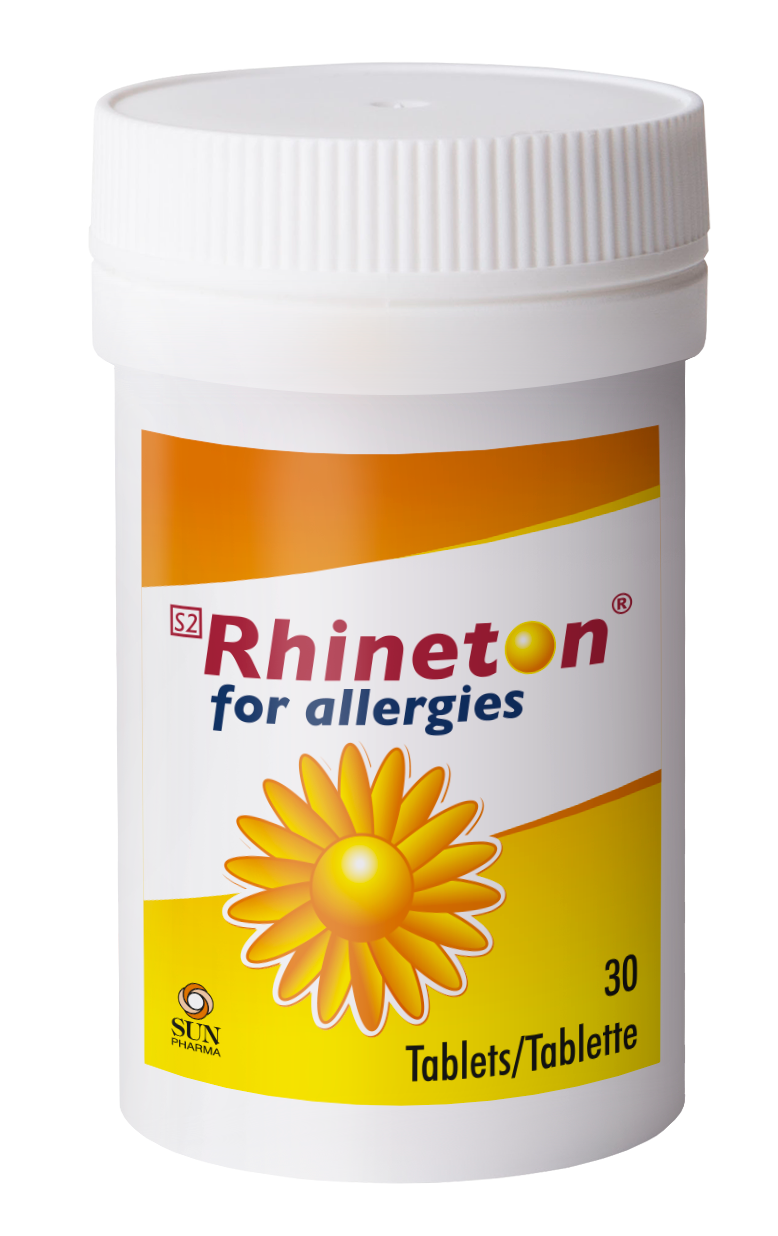
Rhineton
Tablet 30 100 1000 Patient ready packs of different pack sizes
scheduling status
S2
registration number
36/5.7.1 /0166
What Rhineton is and what it is used for
RHINETON is indicated for symptomatic treatment of perennial and seasonal allergic rhinitis, vasomotor rhinitis, allergic conjunctivitis and mild, uncomplicated allergic skin manifestations of urticaria and angioedema. RHINETON is also indicated as therapy for
anaphylactic reactions adjunctive to adrenaline and other standard
measures after the acute manifestations have been controlled. Skin conditions such as allergic eczema, atopic dermatitis, insect bites and drug reactions are often relieved by RHINETON.
dosage
Adults and children 12 years or older: One 4 mg RHINETON tablet
every 4 to 6 hours, up to a maximum of 24 mg in 24 hours.
Children 6 to 12 years: 2 mg (Half a RHINETON tablet) every 4 to 6
hours, up to a maximum of 12 mg in 24 hours.
Children up to 6 years: Use is not recommended.
how to take
Do not share medicines prescribed for you with any other person.
Always take RHINETON exactly as described in this leaflet or as your doctor,
pharmacist or nurse has told you. Check with your doctor, pharmacist or nurse
if you are not sure. Adults and children 12 years or older: One 4 mg RHINETON tablet every 4 to 6 hours, up to a maximum of 24 mg in 24 hours.
Children 6 to 12 years: 2 mg (Half a RHINETON tablet) every 4 to 6 hours, up to a maximum of 12 mg in 24 hours.
Children up to 6 years: Use is not recommended.
If you have the impression that the effect of RHINETON too strong or too weak, talk to your doctor or pharmacist.
What Rhineton contains
Each RHINETON tablet contains
Chlorpheniramine maleate 4mg.
other ingredients
Lactose monohydrate,
Magnesium stearate,
Microcrystalline cellulose,
Purified talc,
Quinolone yellow lake,
Sodium lauryl sulphate.
Therapeutic classification
Pharmacotherapeutic group: Antihistamines for systemic use, ATC code: R06AB02.
© 2026 SAHPRA. ALL RIGHTS RESERVED